
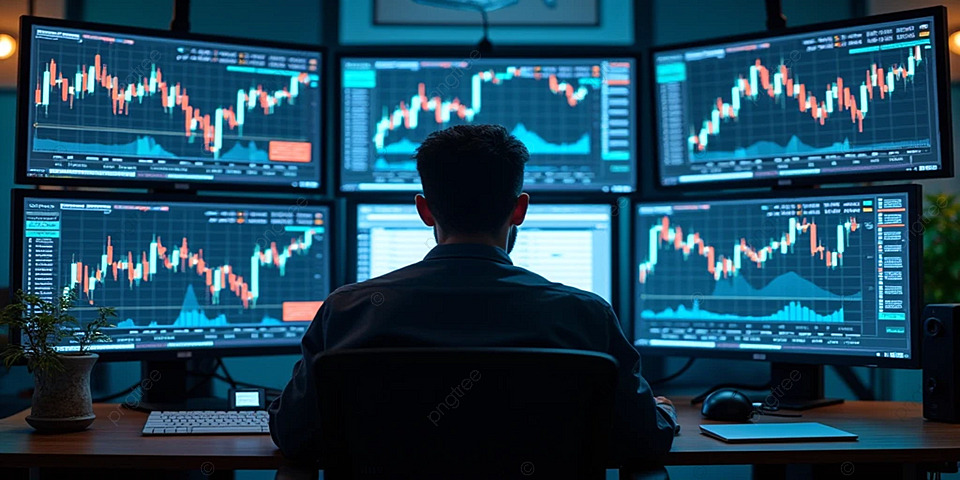
1. What Is Forex Trading?
Forex trading, also known as foreign exchange trading, is the process of buying and selling currencies to profit from changes in exchange rates. The term Forex comes from Foreign Exchange.
For example:
- You buy EUR/USD if you believe the euro will strengthen against the US dollar.
- You sell EUR/USD if you expect the euro to weaken.
The forex market is the largest financial market in the world, with an average daily trading volume exceeding $7 trillion, making it larger than the stock and cryptocurrency markets combined.

2. How the Forex Market Works
🔹 A Decentralized Market
Unlike stock markets, forex:
- Has no central exchange
- Operates through an OTC (Over-the-Counter) structure
Transactions occur electronically between:
- Major banks
- Financial institutions
- Hedge funds
- Forex brokers
- Retail traders
🔹 Open 24 Hours a Day, 5 Days a Week
Forex operates continuously from Monday to Friday due to overlapping global trading sessions:
- Sydney
- Tokyo
- London
- New York
This allows traders to access the market at almost any time.
3. Currency Pairs Explained
Forex is always traded in currency pairs.
📌 Example: EUR/USD
- EUR – Base currency
- USD – Quote currency
A price of 1.1000 means:
1 euro equals 1.10 US dollars
🔹 Types of Currency Pairs
- Major pairs: EUR/USD, GBP/USD, USD/JPY
- Minor pairs: EUR/GBP, AUD/JPY
- Exotic pairs: USD/TRY, EUR/THB (higher risk, lower liquidity)
4. What Are Pips, Lots, Spreads, and Commissions?
📏 Pip
A pip (percentage in point) is the smallest price movement in a currency pair.
- For most pairs: 1 pip = 0.0001
- Example: EUR/USD moves from 1.1000 to 1.1001 = 1 pip
📦 Lot
A lot represents trade size:
- Standard lot: 100,000 units
- Mini lot: 10,000 units
- Micro lot: 1,000 units
📉 Spread
The spread is the difference between the bid and ask price and represents the primary trading cost.
💰 Commission
Some brokers charge a fixed commission per trade, commonly found on ECN or raw-spread accounts.
5. Leverage and Margin in Forex
⚠️ What Is Leverage?
Leverage allows traders to control a larger position with a smaller amount of capital.
Example:
- Leverage 1:100
- $100 margin controls a $10,000 position
⚠️ Leverage amplifies both profits and losses.
🔐 What Is Margin?
Margin is the capital required to open and maintain a trade.
- Insufficient margin may lead to a margin call or stop-out
6. Forex Trading Sessions
| Session | Time (GMT) | Characteristics |
|---|---|---|
| Sydney | 22:00 – 07:00 | Low volatility |
| Tokyo | 00:00 – 09:00 | JPY-focused |
| London | 08:00 – 17:00 | High liquidity |
| New York | 13:00 – 22:00 | Strong volatility |
📌 The London–New York overlap offers the best trading opportunities.
7. Who Participates in the Forex Market?
- Central banks
- Commercial banks
- Investment funds
- Multinational corporations
- Forex brokers
- Retail traders
Retail traders represent a small percentage but benefit from deep liquidity and tight spreads.
8. Types of Forex Market Analysis
📊 Technical Analysis
- Price charts
- Indicators (RSI, MACD, EMA)
- Candlestick patterns
📰 Fundamental Analysis
- Interest rates
- Inflation (CPI)
- Employment data (NFP)
- Central bank policies
🧠 Sentiment Analysis
- Market psychology
- Commitment of Traders (COT) reports
- Retail positioning data
9. How to Start Trading Forex (Step-by-Step)
✅ Step 1: Learn the Basics
Understand:
- Pips and lots
- Leverage
- Risk management
✅ Step 2: Choose a Reliable Forex Broker
Look for:
- Strong regulation (FCA, ASIC, CySEC)
- Competitive spreads
- Stable trading platforms
✅ Step 3: Open a Demo Account
A demo account allows you to:
- Practice risk-free
- Learn the platform
- Test strategies
✅ Step 4: Build a Trading Strategy
Your strategy should include:
- Entry rules
- Stop-loss placement
- Take-profit targets
- Risk-to-reward ratio of at least 1:2
10. Risk Management in Forex Trading (Most Important)
✔ Risk only 1–2% per trade
✔ Always use a stop-loss
✔ Avoid overtrading
✔ Control emotions
Long-term success depends on capital preservation, not frequent wins.
11. Pros and Cons of Forex Trading
✅ Advantages
- High liquidity
- 24/5 market access
- Low entry barrier
- Flexible leverage
❌ Disadvantages
- High risk
- Emotional pressure
- Requires discipline and education
12. Is Forex Trading Right for You?
Forex trading may be suitable if you:
✔ Enjoy analysis
✔ Are patient and disciplined
✔ Are willing to learn long-term
Forex may NOT be suitable if you:
❌ Seek quick profits
❌ Struggle with emotional control
13. Frequently Asked Questions (FAQ)
❓ Is forex trading legal?
Yes, forex trading is legal in many countries when conducted through regulated brokers.
❓ How much money do I need to start?
You can start with $50–$100, but $300–$500 is recommended for proper risk management.
❓ Forex vs Crypto: What’s the difference?
- Forex is generally more stable
- Crypto is more volatile
- Forex offers deeper liquidity
14. Final Thoughts
Forex trading offers significant opportunities but also carries substantial risk. Success requires education, discipline, proper risk management, and choosing a trustworthy broker. With the right approach, forex can become a long-term trading or investment opportunity.
Learn more about us
Top Forex And Crypto 2026

Trusted broker partners
Explore these featured brokers to get started.




Leave a Reply